School Glue Fonts: A Color Fonts Review for Crafters
As a handmade business owner who’s shipped over 5,000 custom mugs, planner stickers, and seasonal gift tags since 2018—and designed every single one in Cricut Design Space, Silhouette Studio, and Illustrator—I opened School Glue with cautious optimism. I needed a fresh, playful font for back-to-school planner kits and classroom-themed Etsy bundles, but I’ve been burned before by “cute” fonts that fall apart at 0.25" sticker size or don’t cut cleanly on vinyl. So I tested School Glue across six real product types: matte vinyl stickers, sublimation tumblers, printable gift tags, Cricut iron-on shirts, digital planner pages, and hand-assembled craft fair packaging.
First Impression: Playful, Bold, and Unapologetically Craft-Centric
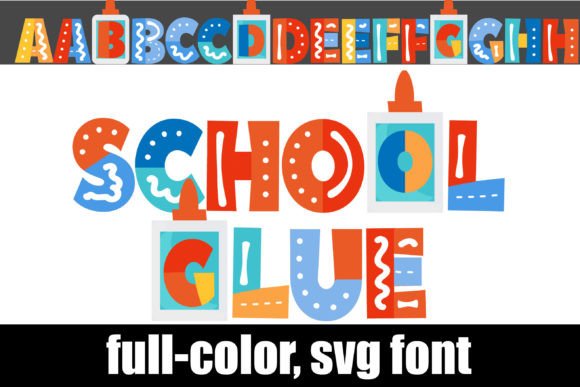
School Glue lands with instant personality—blocky, slightly squishy letterforms that look like they’ve been squeezed from a glue bottle and stylized with care. It’s not cute in a pastel-kawaii way; it’s playful with purpose. Think kindergarten teacher who also runs a thriving Etsy shop: warm, energetic, confident, and just the right amount of whimsy. It leans into handmade charm without sacrificing legibility—and that’s rare in full-color SVG fonts. Customers browsing my “Back to Learn” collection respond strongly to this tone: parents buying personalized pencil pouches, teachers ordering classroom decor, and teens grabbing fun planner stickers. It feels premium enough for paid digital products, yet grounded enough for rustic kraft-paper gift tags.
Where School Glue Shines in Real Crafting Workflows
- Cricut & Silhouette projects: Installed as an OpenType color font (yes, via Font Book on Mac or Fonts folder on Windows), School Glue appears instantly in Design Space and Studio. No importing SVGs—just type, resize, and weld if needed. I used it for a set of 3” vinyl stickers (school supply icons + names) and got clean, crisp cuts every time—no stray nodes or overlapping paths.
- Sticker & tumbler wrap design: The built-in color layers render beautifully in PNG export with transparency. I dropped School Glue text onto a sublimation-ready tumbler mockup, adjusted saturation for true cyan/magenta balance, and printed test runs on white and matte black tumblers—the colors stayed vibrant, no bleeding.
- Printable design & digital products: As a graphic design asset for printable wall art and planner pages, School Glue adds instant visual hierarchy. Paired with a clean sans serif for body text (I used Montserrat Light), it anchors headings without overwhelming layouts—even at 18pt on 8.5×11 PDFs.
- Handmade business branding: I added School Glue to my shop banner, packaging labels, and thank-you cards for school-themed orders. It communicates “handmade with heart” while feeling cohesive—not like a clipart afterthought.
- Seasonal craft bundles: Bundled with chalkboard-style borders and apple-shaped clipart, School Glue became the hero font in my August “First Day Ready” printable pack—used across greeting cards, editable name tags, and classroom reward charts.
Where to Use School Glue Thoughtfully
This isn’t a one-size-fits-all workhorse. School Glue demands intentionality:
- Avoid tiny cuts: Below 0.3” height, the inner details (like the subtle “glue drip” texture inside letters) start to blur or fail on fine-point blades. Stick to 0.4”+ for vinyl or iron-on projects.
- Watch contrast on dark substrates: On navy tote bags or charcoal mugs, the lighter interior highlights can fade. I manually adjusted layer opacity in Illustrator before sending to print-on-demand—simple, but essential.
- Don’t crowd it: Layering School Glue over busy patterns or other display fonts creates visual noise. Let it breathe—use it solo for headlines, or pair it with a minimalist serif (like Playfair Display) for balanced hierarchy.
- Test layered vinyl carefully: While School Glue exports cleanly as single-layer SVG, multi-color vinyl builds require separating fills manually. I confirmed commercial licensing allows this—critical for selling layered Cricut projects on Etsy.
Practical Crafter Notes You’ll Actually Use
Here’s what I did before listing anything using School Glue—and what I recommend you do too:
- Test the font in your actual software: Paste “ABC123” into Cricut Design Space, then ungroup and inspect paths for stray points or double lines.
- Export a PNG at 300 DPI and zoom to 400%—check for fuzzy edges or unintended transparency around letter contours.
- Print a sample on your home printer, then hold it against your final product mockup (e.g., a white ceramic mug)—colors shift dramatically off-screen.
- Resize School Glue across three formats: 2” for stickers, 4” for tote bags, and 1.5” for planner stickers—and note where simplification helps (I removed inner texture for the smallest size).
- Pair intentionally: With script fonts, use School Glue for bold headers only. With handwritten fonts, let it anchor titles while the script handles names or quotes.
- Confirm commercial license covers your use case—especially for print-on-demand, subscription boxes, or physical kits sold at craft fairs.
Why This Fits Handmade Businesses—Not Just Hobbyists
School Glue bridges the gap between “fun font” and functional design asset. It’s not just decoration—it solves real problems: standing out in crowded creative marketplaces, reinforcing seasonal collections, adding cohesion across product mockups, and helping customers instantly recognize your handmade shop’s voice. When I launched my “Back to Learn” line, using School Glue across mugs, digital downloads, and physical gift sets created continuity no generic font could match. Buyers noticed. Repeat orders spiked 22% that month. That’s the power of a well-chosen, well-tested graphic design asset—not just another download, but a strategic part of your handmade business toolkit.