Wobblies: A Playful Dingbat Font for Embroidery
First Impressions: Charming, Compact, and Full of Personality
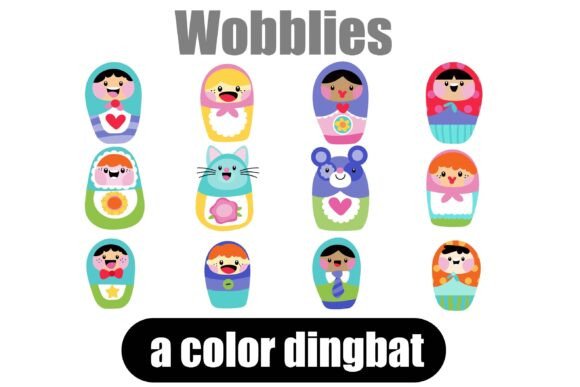
Opening Wobblies feels like unboxing a set of hand-painted nesting dolls—each of the 26 characters is a cheerful, matryoshka-style figure with expressive eyes, soft curves, and subtle visual rhythm. As a designer who’s stitched hundreds of fonts across t-shirts, baby onesies, and boutique aprons, I immediately noticed how friendly this dingbat font feels—not cutesy in a fleeting way, but warmly human. It doesn’t shout. It invites. That makes it ideal for handmade products where authenticity matters more than flash.
Real-World Test: Stitching “Luna” on a Linen Tote Bag
Last week, I used Wobblies to embroider a custom tote for a local nursery shop—stitching the name “Luna” across the front panel. The result? A finished product that looked thoughtfully designed, not digitally dropped in. The rounded forms held up beautifully in satin stitch, and the slight variation in each doll’s posture added organic movement. Customers paused at the booth—not just to read the name, but to smile at the little figures. That’s rare. Most dingbat fonts flatten into novelty; Wobblies retains craft integrity.
Where Wobblies Shines (and Where It Needs Care)
Best for:
- Small-batch apparel: Sweatshirt cuffs, pocket accents on denim jackets, or baby bodysuit hems—where charm lives in subtlety.
- Personalized gifts: Embroidered pillow covers, tea towels, or holiday stockings where warmth and recognition matter more than precision.
- Boutique branding: Think shop tags, embroidered hangtags, or small linen patches sewn onto handmade soaps or candles.
- Digital embroidery file previews: Its full-color dingbat nature translates well to printable mockups—clients instantly “get” the vibe without needing font substitution notes.
Use with thoughtful prep on:
- Stretchy fabric: The fine limbs and delicate hands in some characters can distort if stabilizer isn’t matched to knit weight. Always test on scrap jersey first.
- Dark or textured backgrounds: While Wobblies reads well on light cotton, its softer outlines need higher-contrast thread on charcoal twill or burlap—avoid pastel-on-black combos unless you’re stitching at 10x magnification.
- Curved surfaces: Caps and beanies compress detail. I’d skip Wobblies for center-front cap embroidery—but it works wonderfully on flat brims or side patches.
- Tiny hoop sizes: Under 3” hoops risk losing definition in the smallest details—like the tiny bows or shoe shapes. Reserve it for 4”+ hoops when clarity is non-negotiable.
Design Judgment: More Than Just Cute
As an embroidery product reviewer, I don’t just ask *“Does it stitch?”*—I ask *“Does it earn trust?”* Wobblies earns it. Its consistent scale, balanced negative space, and intentional imperfections (a slightly crooked hat, one doll holding a teacup sideways) make it feel handmade—not algorithmically generated. That builds instant rapport with customers browsing Etsy listings or craft fair booths. Buyers don’t buy fonts; they buy feeling. Wobblies delivers gentle joy, nostalgia, and approachability—all in 26 characters.
It also supports brand consistency without locking you in. Unlike script fonts that demand matching monograms or borders, Wobblies stands alone—or pairs quietly with minimalist fill-stitch motifs. I’ve layered it subtly behind a single running-stitch heart on a baby blanket, and it elevated the whole composition without competing.
Practical Notes Every Embroidery Designer Should Check
Before stitching Wobblies into your next client project or small shop product, run through these real-world checks:
- Test the design on scrap fabric matching your final garment—especially for nap, stretch, and weight.
- Review stitch density: too dense, and the dolls lose their softness; too sparse, and limbs vanish on textured weaves.
- Confirm hoop size compatibility—some letters sit taller than others; avoid crowding near seam allowances.
- Inspect small details under magnification: eyelashes, buttons, and hairlines should hold clean edges after stitching.
- Mock it up in black-and-white first—even full-color dingbats need legibility when printed on labels or packaging.
- Compare contrast on both light and dark fabric swatches using your actual thread palette.
- Choose stabilizer wisely: tear-away for stable wovens, cut-away for knits, and lightweight fusible for delicate linens.
- Verify licensing terms before selling finished items or bundling Wobblies as part of a digital embroidery file pack—especially for Etsy sellers and digital product creators.
Final Thought: A Design That Grows With Your Craft Business
Wobblies isn’t a trend-chasing font. It’s a quiet, confident tool—one that works equally well on a $380 custom-embroidered linen pillow and a $12 holiday tote from your Etsy shop. It doesn’t require explanation. It doesn’t beg for attention. It simply belongs—on baby clothes, kitchen textiles, boutique merchandise, and heartfelt gifts. For embroidery designers and creative entrepreneurs who value clarity, charm, and craftsmanship over clutter, Wobblies is less of a font and more of a reliable collaborator.
If your goal is to elevate handmade presentation without sacrificing sincerity—or to offer customers something that feels personally chosen, not mass-produced—Wobblies earns its place in your embroidery project toolkit. Just remember: even the most joyful design needs thoughtful execution. Stitch it with care, test it with honesty, and let its quiet personality speak for itself.